Blog

  • Money, Deflation, and Recovery: Rethinking the Causes and End of the Great Depression

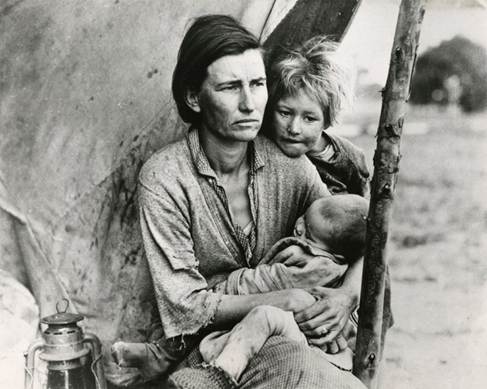
    Figure 1 Dorothea Lange, Migrant Mother, 1936.

    The Great Depression is often explained through charts, data, and economic models, but it was first experienced as a human crisis. Images like Dorothea Lange’s Migrant Mother remind readers that behind falling prices and contracting credit were families facing uncertainty, displacement, and prolonged unemployment. The economic collapse was not abstract. It was lived daily, often with little sense of when or whether recovery would come.

    That human dimension matters when evaluating competing explanations for the Depression. While the stock market crash captured national attention, it did not by itself produce a decade-long economic collapse. What transformed a downturn into a systemic crisis was the contraction of the money supply, the spread of deflation, and the inability of policymakers to stabilize credit and demand. Just as importantly, recovery did not occur because markets naturally corrected themselves. Rather, it unfolded only when monetary conditions shifted. This interpretation does not resolve every historiographical debate, but it offers the most consistent explanation for the Depression’s depth, duration, and eventual recovery.
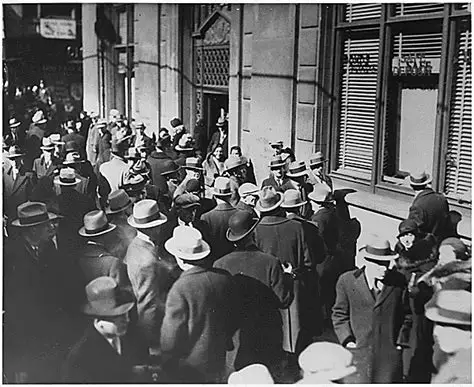
    Figure 2 Depositors gather outside a band during the Great Depression

    This analysis uses both primary and secondary sources. The primary evidence comes from monetary trends and policy actions: bank failures, changes in the money supply, the gold program, and shifts in interest rates. The secondary sources provide interpretation and context. Christina Romer offers the strongest empirical case for monetary recovery. Michael Bernstein places the Depression within a broader historiographical debate over short-term shocks, policy failure, and long-term structural weakness. Robert Samuelson highlights the importance of institutional constraints, especially the gold standard. Fred Foldvary’s Austrian interpretation is useful as a contrast because it attributes the crisis to earlier credit expansion rather than to the collapse in demand after 1929. Read together, these sources make it possible to test one theory against competing explanations rather than simply summarize them.

    A monetary reading begins with a straightforward claim: the Depression became catastrophic when money and credit collapsed. The stock market crash weakened confidence, but it cannot fully explain the sustained contraction in production, employment, and prices. As banks failed, the money supply contracted, setting off a deflationary spiral. Falling prices increased the real burden of debt, making it more difficult for households and businesses to spend, invest, or repay existing obligations. In this environment, price adjustment did not stabilize the economy; it intensified contraction. Samuelson’s discussion of Irving Fisher’s debt-deflation framework is particularly helpful here, illustrating how defaults, declining asset values, and falling prices reinforced one another. Bernstein similarly argues that explanations focused solely on 1929 fail to explain why the crisis deepened over time.

    This monetary interpretation also explains why the Depression spread and persisted internationally. The gold standard limited the ability of governments and central banks to expand the money supply and stabilize domestic economies. Samuelson argues that the gold standard acted as a straitjacket because countries feared that aggressive monetary action would threaten convertibility and trigger further instability. In practice, that meant governments often defended gold rather than employment or recovery. The result was not simply policy error in an ordinary sense. It was institutional rigidity built into the preexisting monetary order. That point matters because it helps explain why the Depression lasted so long even after the initial shock had passed.
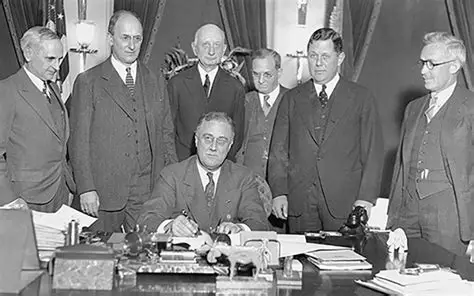
    Figure 3 Franklin D. Roosevelt Signs the Gold Reserve Act, 1934

    The Austrian theory offers a serious counterargument, but it is less persuasive on the question of why the Depression remained so severe for so long. Foldvary argues that the real problem began in the 1920s, when artificially low interest rates and credit expansion encouraged overinvestment, particularly in real estate and long-duration capital. In that reading, the Depression was the correction of earlier “malinvestment.” That interpretation has explanatory value, particularly in understanding why a credit-fueled boom can become unstable. Still, it is less effective in explaining the magnitude of the collapse after 1929 and the weakness of recovery absent policy change. If the downturn had merely been a market correction, one would expect adjustment to have worked faster and more fully than it did. Instead, unemployment remained extraordinarily high and output stayed depressed for years. The monetary framework better accounts for that prolonged failure.

    Christina Romer’s analysis is especially important because it addresses the other half of the question: what ended the Depression? Her answer is clear. Recovery before 1942 was driven largely by monetary expansion, not by fiscal policy and not by spontaneous self-correction. Gold inflows, devaluation, and changes in monetary conditions expanded the money stock, lowered real interest rates, and stimulated investment and purchases of durable goods. In Romer’s estimates, without those monetary changes, the economy would have remained far more depressed for much longer. That argument matters because it shifts the focus from the common claim that World War II alone ended the Depression. Wartime mobilization certainly completed the recovery, but the economic turn had already begun once monetary conditions changed in the mid-1930s.

    This is where the monetary theory proves strongest. It explains both the collapse and the recovery through the same mechanism. When money contracted, the economy spiraled downward. When money expanded, output recovered. That does not mean fiscal policy was irrelevant in every respect, nor does it mean structural problems did not exist. Bernstein is right to remind readers that the Depression was also a broader historical problem connected to changes in capitalism and economic thought. But if the question is which single theory best explains the crisis and its eventual demise, the monetary interpretation remains the most convincing because it connects cause, persistence, and recovery in one coherent framework.
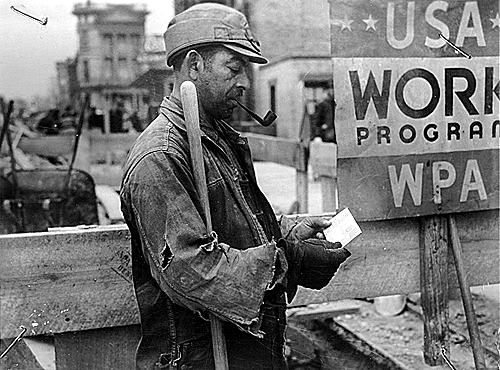
    Figure 4 WPA worker receiving paycheck during the New Deal

    The Great Depression was not simply the result of the stock market crash, nor was it just the delayed correction of excesses from the 1920s. It became a prolonged catastrophe because monetary collapse and deflation undermined the functioning of the broader economy. It persisted because institutional constraints, particularly the gold standard, limited policy responses. And it ended not through spontaneous adjustment, but through a shift in monetary conditions that restored spending and investment. Other interpretations contribute to our understanding, but the monetary framework provides the most complete explanation of the Depression’s full trajectory from collapse to recovery.

    Bibliography

    Bernstein, Michael A. “The Great Depression as Historical Problem.” OAH Magazine of History 16, no. 1 (2001): 3–10.

    Foldvary, Fred E. “The Austrian Theory of the Business Cycle.” American Journal of Economics and Sociology 74, no. 2 (2015): 278–297.

    Lange, Dorothea. Migrant Mother. Photograph. Nipomo, California, 1936. Library of Congress, Prints and Photographs Division.

    Romer, Christina D. “What Ended the Great Depression?” The Journal of Economic History 52, no. 4 (1992): 757–784.

    Samuelson, Robert J. “Revisiting the Great Depression.” Wilson Quarterly 36, no. 1 (2012): 36–43.

    Franklin D. Roosevelt Presidential Library and Museum. “Bank Run During the Great Depression.” Photograph. ca. 1930s.

    Franklin D. Roosevelt Presidential Library and Museum. “President Roosevelt Signs the Gold Reserve Act.” Photograph. January 30, 1934.

    U.S. National Archives. “WPA Worker Receiving Paycheck.” Photograph. 1930s.
  • Building Wealth in Jim Crow America: Madam C.J. Walker and the Business of Black Enterprise, 1900–1919

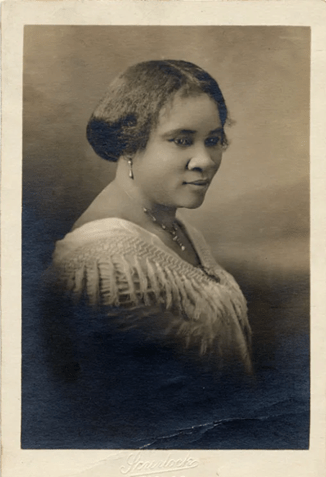
    Figure 1 Madam C.J. Walker, early twentieth-century entrepreneur and founder of a national hair-care empire

    Abstract: This essay examines Madam C.J. Walker’s business career (1900–1919) to argue that her success reflected both the opportunities and constraints of early twentieth-century capitalism. By combining organizational strategy with community-based networks, Walker built a scalable enterprise that challenged racial exclusion while reinforcing the importance of alternative economic structures.

    At the turn of the twentieth century, American capitalism was expanding rapidly, yet its opportunities remained profoundly unequal. Within this environment, Madam C.J. Walker emerged not only as one of the most successful entrepreneurs of the early twentieth century, but also as a figure whose business practices illuminate the complexities of race, gender, and economic power in modern America. Her rise from poverty to leadership of a national hair-care empire between 1900 and her death in 1919 reveals how marginalized individuals could navigate and reshape the structures of American capitalism.

    Born Sarah Breedlove in 1867 to formerly enslaved parents, Walker’s early life was defined by economic hardship. Yet her experience also positioned her within networks of Black labor and community that would later support her entrepreneurial efforts. By the early 1900s, Walker had developed and marketed a line of hair-care products specifically designed for African American women. Her business expanded rapidly through a combination of direct sales, training programs, and strategic branding. By the 1910s, the Madam C.J. Walker Manufacturing Company employed thousands of sales agents and generated substantial profits.

    Walker’s success was not merely a personal achievement; it was rooted in a broader economic transformation. As historians of business have emphasized, the growth of modern enterprises in the early twentieth century depended on organizational capabilities—particularly systems of distribution, marketing, and managerial coordination.

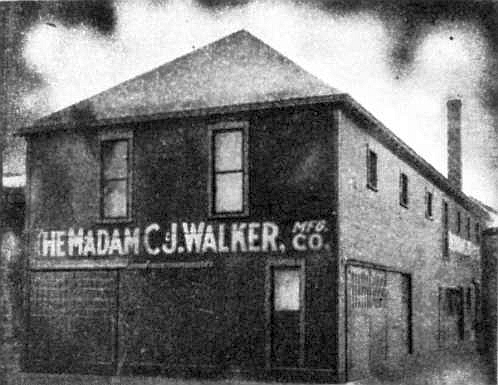
    Figure 2 The Madam C.J. Walker Manufacturing Company in Indianapolis, symbolizing the expansion of Black-owned enterprise in the early twentieth century.

    Walker’s company exemplified these principles. Rather than relying solely on product innovation, she built a highly structured sales network of “Walker Agents,” who were trained not only in sales techniques but also in personal presentation and financial independence. This system created a scalable business model that extended across the United States and into the Caribbean and Central America.

    Figure 3 Graduates of the Walker School of Beauty Culture, representing the national network of trained sales agents.

    At the same time, Walker’s enterprise functioned within a national market that had been deliberately constructed through political and legal processes in the late nineteenth century. The integration of transportation networks, communication systems, and federal economic policy enabled businesses like Walker’s to reach customers far beyond local communities. Yet this national market remained uneven, particularly for African Americans who faced legal segregation and economic exclusion. Walker’s success, therefore, depended on her ability to navigate both the opportunities and constraints of this system.

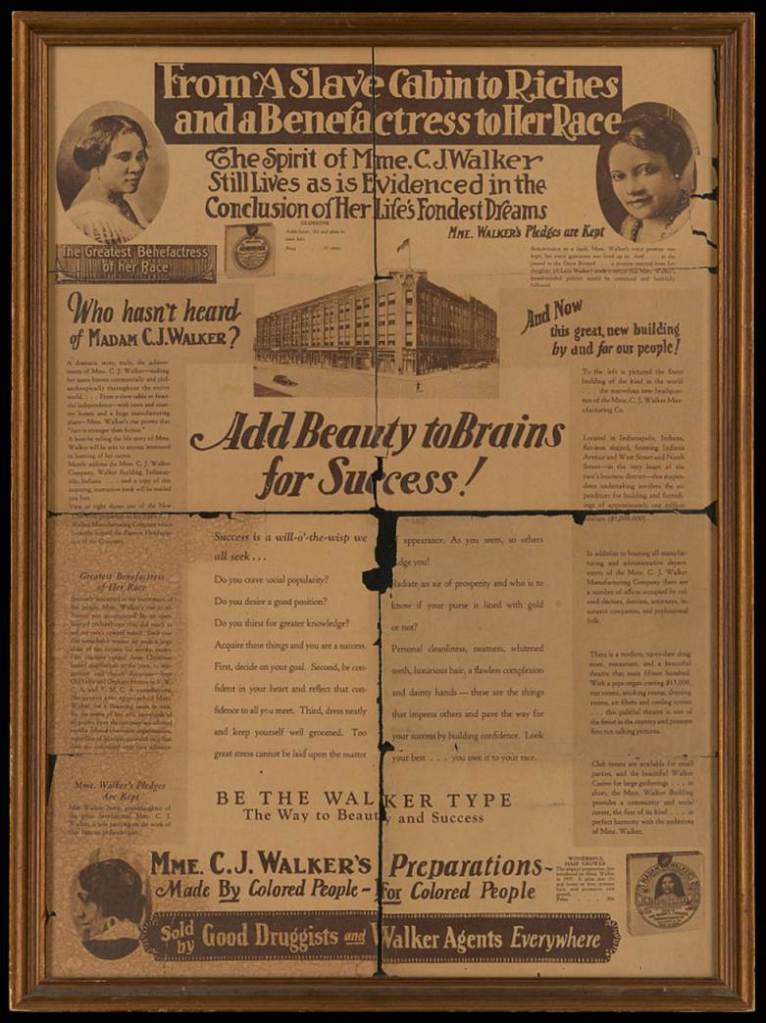
    Her marketing strategy reveals a sophisticated understanding of consumer identity and social context. Walker’s advertisements emphasized not only beauty but also respectability, hygiene, and economic self-improvement. In doing so, she aligned her products with broader aspirations within Black communities during the Progressive Era. Unlike many white-owned firms, Walker’s company directly addressed the needs of Black women, creating a niche market that mainstream businesses had largely ignored.

    Figure 4 Advertisement for Madam C.J. Walker’s products, emphasizing beauty, health, and economic success within African American communities.

    Walker also leveraged community networks to expand her business. Her agents operated within churches, social organizations, and local communities, blending economic activity with social engagement. This approach challenges simplistic economic models that assume individuals act in isolation. As scholars have noted, economic activity often depends on cooperation, trust, and shared institutions rather than purely individual decision-making. Walker’s success illustrates how communal structures could function as economic assets, enabling growth even in the absence of formal institutional support.

    However, Walker’s career also highlights the limitations of Progressive Era economic reforms. While reformers often promoted regulation as a means to stabilize markets and promote fairness, historians such as Gabriel Kolko have argued that such policies frequently reinforced the power of established businesses rather than disrupting inequality. Walker’s enterprise developed largely outside these regulatory frameworks, suggesting that for marginalized entrepreneurs, success often depended less on state action than on alternative strategies of community-based enterprise and self-organization.

    Walker’s business model also reflects the broader intellectual and political climate of the early twentieth century. Progressive Era thinkers increasingly emphasized efficiency, organization, and expertise as keys to economic success. Walker adopted many of these principles, particularly in her emphasis on training, standardization, and professionalization among her agents. Yet she adapted them to serve a different purpose: not the expansion of state power or corporate consolidation, but the economic empowerment of Black women.

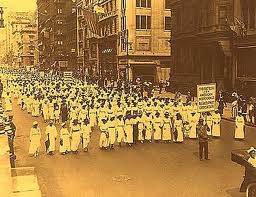
    Figure 5 Delegates at a national convention of Walker agents, illustrating the scale and social impact of her business network.

    Equally significant was Walker’s commitment to philanthropy and social advocacy. She invested in educational institutions, supported anti-lynching campaigns, and promoted economic independence within Black communities. Her wealth was thus not only a measure of personal success but also a tool for collective advancement. This dual role complicates traditional interpretations of early twentieth-century capitalism, which often focus exclusively on accumulation rather than redistribution.

    From a historiographical perspective, Walker’s story underscores the importance of narrative in understanding economic history. As scholars of business history have argued, historical narratives are not merely descriptive but analytical, shaping how we interpret economic processes and outcomes. By focusing on Walker’s lived experience, historians can move beyond abstract models to examine how economic systems functioned in practice—particularly for those excluded from mainstream institutions.

    Ultimately, Madam C.J. Walker’s business career reveals both the possibilities and limits of American capitalism in the early twentieth century. Her success demonstrates that entrepreneurial innovation, organizational skill, and community engagement could overcome significant structural barriers. At the same time, her experience highlights the persistence of inequality within the national market and the need for alternative pathways to economic power.

    Walker’s legacy, therefore, is not simply that of a successful entrepreneur. She represents a distinct model of economic agency, one rooted in resilience, collective advancement, and strategic adaptation within a constrained system. In doing so, she challenges historians to reconsider the boundaries of business history and to recognize the diverse actors who shaped the modern American economy.

    Bibliography:

    Bundles, A’Lelia. On Her Own Ground: The Life and Times of Madam C.J. Walker. New York: Scribner, 2001.

    Bundles, A’Lelia. “Madam C. J. Walker’s First National Convention (August 30–31, 1917).” Walker Family Archives. Accessed online.

    Chandler, Alfred D. “Organizational Capabilities and the Economic History of the Industrial Enterprise.” 1992.

    Kolko, Gabriel. The Triumph of Conservatism: A Reinterpretation of American History, 1900–1916. New York: Free Press, 1963.

    Library of Congress. “Portrait of Madam C. J. Walker.” Prints and Photographs Division. Accessed online.

    Library of Congress. “Madam C. J. Walker Manufacturing Company Building, Indianapolis.” Prints and Photographs Division. Accessed online.

    Popp, Andrew, and Susanna Fellman. “Writing Business History: Creating Narratives.”

    Schomburg Center for Research in Black Culture, New York Public Library. “Walker Agents and Beauty Culture Training Schools.” Digital Collections. Accessed online.

    Smithsonian National Museum of African American History and Culture. “Madam C. J. Walker Hair Product Advertisement.” Collections Database. Accessed online.

    Walker, Madam C.J. Madam C.J. Walker on Womanhood, Hair, and Beauty. Indianapolis, 1914.

  • HIUS713 Blog Post #1: Uneven Recovery: Civil War Widows and Economic Survival in Postbellum America

    Abstract:

    This study compares northern and southern Civil War widows in the postbellum economy through Union pension records, Confederate pension systems, and agricultural labor data. It argues that widows in the North had greater institutional support, while widows in the South remained more vulnerable to agrarian insecurity and conditional relief.

    NOTE: Research Topic for HIUS713

    For the research project for this class, I will be focusing on the following question: How did economic pressures from ranching, tourism, and resource extraction shape the management of wolf and grizzly bear populations in Yellowstone National Park during the twentieth century?

    Uneven Recovery: Civil War Widows and Economic Survival in Postbellum America, 1865–1900

    The decades after the Civil War brought unmistakable economic growth to the United States, but that growth was distributed unevenly across regions and households. Northern industrialization accelerated, railroads and markets expanded, and the federal government enlarged its administrative reach. In the South, by contrast, war damage, emancipation, and weak capital reserves sustained a more fragile, labor-intensive economy. Civil War widows reveal these differences with unusual clarity because their survival depended not only on work and family networks but also on whether institutions could convert wartime sacrifice into postwar support. Widowhood thus serves as a social measure of who could actually access the fruits of postwar expansion. Union widows, though often poor and administratively burdened, generally had greater access to regularized assistance through the federal pension system. Confederate widows more often faced insecure agricultural labor markets and piecemeal state relief conditioned on poverty itself.

    This comparison uses two forms of evidence suited to measuring postbellum economic conditions. For the North, Union pension records provide a quantifiable and richly descriptive source base. The National Bureau of Economic Research’s Union Army pension project notes that widow files commonly recorded marriage evidence, children, residence, and the veteran’s economic circumstances; these materials therefore illuminate both dependency and access to state aid. Federal legislation first made widows eligible for Civil War pensions in 1862, and later measures, especially the 1890 Disability Act, expanded the rolls dramatically. For the South, county-level agricultural workforce data compiled by Lee Craig and Thomas Weiss, together with scholarship on Confederate pensions, reveal a region still heavily tied to rural labor long after Appomattox. This method therefore compares two different structures of survival: federal cash transfers in the North and agrarian dependency in the South.

    Northern widows occupied a difficult but comparatively more stable position in the postbellum economy because the federal pension system translated loss into a recurring claim upon the national state. Laura Salisbury’s research shows that Civil War pensions affected widows’ remarriage decisions, a sign that these payments materially shaped household strategy rather than serving as merely symbolic recognition. Just as important, pension applications linked widows to an expanding bureaucracy that required affidavits, proof of marriage, and testimony about family circumstances. A northern widow’s own words capture both the promise and the cost of this system. In 1867, Henrietta Emory wrote to federal officials that she had “had so much trouble & gone so in debt… that (she) was able to do no more,” describing herself as “a poor woman” who was “not able to stand to it.” Her statement shows that federal support was neither simple nor generous, but it also demonstrates that Union widows could make claims on a national administrative structure in ways unavailable to most southern widows.

    The South offered a starkly different environment. Postwar recovery unfolded within a region whose infrastructure, credit systems, and labor arrangements had been shattered by war. Economic historians have long shown that emancipation transformed southern production, but it did not produce a diversified welfare system for former Confederate households. The EH.net agricultural workforce estimates and Thomas Weiss’s work on nineteenth-century productivity underscore how central rural labor remained to the region between 1870 and 1900. For many southern widows, economic security rested on access to land, sharecropping contracts, kin assistance, household production, and seasonal labor rather than on steady external payments. In such a setting, widowhood intensified already precarious conditions, especially where cash was scarce and crop outcomes uncertain.

    Southern pension systems reflected and reinforced this fragility. The National Archives notes that Confederate pensions were administered by the states rather than the federal government and that eligibility typically depended on indigence or disability. Shari Eli and Laura Salisbury argue that these programs emerged gradually from the 1880s forward and were shaped by political calculations as much as by social welfare concerns. Elna Green further demonstrates that Confederate pensions upheld conservative gender expectations and white Democratic order even while offering limited relief to some widows. The language of application records makes this conditionality unmistakable. In a Virginia pension statement, Susan Woodson declared that she had “no means of support either direct or indirect.” Her claim did not rest primarily on national entitlement through service but on proving destitution within a fragmented, state-based welfare regime. That contrast is fundamental: northern widows more often petitioned a bureaucratic state able to distribute regular benefits, while southern widows typically had to establish poverty before receiving modest and uneven assistance.

    The archive itself mirrors this regional divergence. Union widow files are centralized in federal repositories and have generated major quantitative scholarship because the records are relatively uniform and extensive. Confederate widow files are dispersed across state archives, less standardized, and often thinner, reflecting the South’s weaker institutional capacity after the war. This imbalance is not only a problem of documentation; it is evidence of the historical reality under examination. Postbellum economic growth did not translate automatically into household security. Widows benefited from growth only when institutions transformed military service into claims that could be recognized, documented, and paid. In the North, federal pensions created a modest but meaningful buffer against instability. In the South, widows continued to navigate an agrarian economy in which support was local, conditional, and often inadequate. Civil War widows therefore demonstrate that the most important divide in postbellum recovery was not simply between prosperous and poor individuals, but between those connected to durable institutions and those left to survive without them.

    Bibliography

    Brimmer, Brandi Clay. Claiming Union Widowhood: Race, Respectability, and Poverty in the Post-Emancipation South. Durham, NC: Duke University Press, 2020.

    Craig, Lee A., and Thomas Weiss. “U.S. Agricultural Workforce, 1800–1900.” EH.net. Accessed May 28, 2026. https://eh.net/database/u-s-agricultural-workforce1800-1900/.

    Eli, Shari, and Laura Salisbury. “Patronage Politics and the Development of the Welfare State: Confederate Pensions in the American South.” NBER Working Paper no. 20829, 2015.

    Faust, Drew Gilpin. This Republic of Suffering: Death and the American Civil War. New York: Alfred A. Knopf, 2008.

    Green, Elna C. “Protecting Confederate Soldiers and Mothers: Pensions, Gender, and the Welfare State in the U.S. South, a Case Study from Florida.” Journal of Social History 39, no. 4 (2006): 1079–1104.

    National Archives. “Civil War Records: Basic Research Sources.” Accessed May 28, 2026. https://www.archives.gov/research/military/civil-war/resources.

    National Archives. “Confederate Pension Records.” Accessed May 28, 2026. https://www.archives.gov/research/military/civil-war/confederate-pension-records.

    National Bureau of Economic Research. “Union Army Data – Pension.” Accessed May 28, 2026. https://www.nber.org/programs-projects/projects-and-centers/union-army-data/union-army-data-pension.

    Ransom, Roger L., and Richard Sutch. One Kind of Freedom: The Economic Consequences of Emancipation. 2nd ed. New York: Cambridge University Press, 2001.

    Salisbury, Laura. “Women’s Income and Marriage Markets in the United States: Evidence from the Civil War Pension.” The Journal of Economic History 77, no. 1 (2017): 1–38.

    Weiss, Thomas. “Long-Term Changes in U.S. Agricultural Output per Worker, 1800 to 1900.” NBER Historical Working Paper no. 23, 1991. William Horne. “The Unspendable Pension of Henrietta Emory Meads.” Journal of the Civil War Era, February 23, 2026.

  • From Thos. to Athanasios: Rediscovering my Grandfather’s Hidden Legacy

    I never met my paternal grandfather, Athanasios Kougkias. He died years before I was born, and by the time I was old enough to ask questions, my father and all of his siblings had passed away too. I am the youngest grandchild, and for most of my life, my grandfather was just a name—one that sounded foreign, distant, and almost mythical. But something inside me refused to let his story fade into silence. I wanted to know who he was, where he came from, and what he endured to give his family a new life in America.

    So I began to dig.

    Growing up, I only knew him as Thomas Kougias. His headstone reads “Thos. Kougias,” and I always wondered what that meant, what his real name had been. I had never seen Thomas abbreviated as Thos. so I knew there was more to the story. It felt like a mystery – one small clue that there was more to his story than what had been passed down. Through genealogical research and help from a genealogist in Greece, I finally discovered that his birth name was Athanasios Kougkias. That moment was powerful. It felt like I had restored something sacred, something lost. I had given him back his name.

    Athanasios was born in Greece—possibly in 1892, 1893, or 1895, depending on which document you believe. His hometown was Ahmetago-Deman on Evia Island, a village that was renamed Prokopi in 1927. Through DNA matches on MyHeritage and conversations with locals in Prokopi, I learned that his family may have been victims of the Greek Genocide, a brutal campaign waged against Christian Greeks by the Ottoman Turks during and after World War I. That realization hit me hard. It reframed his immigration not as a hopeful journey, but as an escape from terror.

    He left Greece on June 7, 1915, aboard the Patris, departing from Piraeus and arriving at Ellis Island. This migration was part of a broader wave of Greek immigration to the U.S. between 1890 and 1921, driven largely by the desire to escape from the atrocities ravaging Greece at the time. My father used to say that Grandpa fought in the Greek army during WWI, and I believe that’s true. After arriving in the U.S., he lived in New York City, then followed the railroad westward to Moline, Illinois, and eventually settled in Missouri Valley, Iowa.

    He married Cecil Conley in 1922 and became a U.S. citizen in 1928. He worked for Union Pacific Railroad as an engineer until his death in 1963. He was also the man behind the little steam engine in the park that children of all ages loved to ride, where my grandmother and their children sold tickets. He was a gardener, a winemaker, and a quiet pillar of his community. He sent money back to Greece for years, until contact with his mother was lost during WWII. I’ve heard he had two brothers and two sisters, but I haven’t been able to trace them – yet.

    What moves me most is how much he gave up. He left behind his homeland, his family, and his language. He endured war, displacement, and the loneliness of starting over in a foreign land. And yet, he built a life. He raised seven children. He worked hard. He survived.

    I’ve made it my mission to keep his memory alive. I’m applying for Greek citizenship as his granddaughter – a way to reclaim the heritage he was forced to leave behind. I’m also writing my dissertation on the Greek Genocide, the very tragedy that likely drove him to flee his homeland. The genocide targeted Christian Greeks in the Ottoman Empire between 1913 and 1923. This work is personal. It’s my way of honoring Athanasios and ensuring that his story, and the stories of so many others like him, are not forgotten.

    In researching his life, I’ve come to understand that family history is more than names and dates. It’s about resilience. It’s about love and sacrifice. It’s about the quiet strength of those who came before us, whose choices shape our lives in ways we may never fully grasp.

    I never got to sit beside my grandfather or hear his voice. But through this journey, I’ve come to know him. And I carry him with me – in my work, in my heart, and in the legacy I hope to pass on.

    Athanasios Kougkias may have been forgotten by history, but he will not be forgotten by me.

  • American Christianity Blog

    Faith and the Founders: Christianity, Civic Virtue, and the Early American Republic

    In the formative years of the American Republic, Christianity played a complex and evolving role in shaping civic life, public morality, and national identity. While the Founding Fathers famously championed Enlightenment ideals and religious liberty, many also saw Christian values as essential to the survival of the republic. This tension—between secular governance and moral foundations rooted in faith—defined much of the early discourse on religion and politics.

    Few figures illustrate this dynamic better than John Adams and Thomas Jefferson. Their extensive correspondence, preserved in The Adams-Jefferson Letters, reveals a nuanced dialogue about religion’s place in public life. Adams, deeply influenced by Puritan moral philosophy, believed that Christianity—particularly its ethical teachings—was indispensable to republican virtue. In a 1813 letter to Jefferson, Adams wrote, “The general principles on which the fathers achieved independence were the general principles of Christianity.” Jefferson, while more skeptical of organized religion, agreed that moral teachings derived from Christianity could support civic harmony. He famously advocated for the separation of church and state, yet also acknowledged the social utility of religious belief.

    This philosophical balance was echoed in public commemorations of American independence. In his 1802 Independence Day oration, Zephaniah Swift Moore emphasized the role of divine providence in the founding of the nation. Speaking in Worcester, Massachusetts, Moore declared:

    “The hand of Heaven has been visible in our deliverance… and the religion of Jesus Christ is the surest foundation of liberty.” Moore’s sermon reflects the widespread belief that Christianity was not merely a private faith but a public good—capable of guiding both leaders and citizens toward virtuous conduct.

    Similarly, William Wirt’s 1826 memorial discourse on the lives of Jefferson and Adams, delivered shortly after their deaths on July 4th, underscores the moral legacy of the Founders. Wirt praised their commitment to liberty and reason, but also noted their shared belief in a moral order that transcended politics. He stated: “They were believers in the moral government of the world… and in the accountability of man to his Creator.”

    These sources, drawn from the Sabin American database, offer rich insight into how Christianity was woven into the fabric of early American civic identity. They also highlight the importance of historical literacy—the ability to interpret primary texts within their cultural and political contexts—and information literacy, which enables us to locate and evaluate archival materials critically.

    In today’s polarized climate, revisiting these foundational debates reminds us that the early Republic was not built on rigid dogma, but on a thoughtful negotiation between faith and reason. Christianity, for many early Americans, was not just a religion—it was a moral compass guiding the experiment in self-government.

    The reflections of Jefferson, Adams, and their contemporaries remind us that the relationship between faith and public life has always been a subject of thoughtful negotiation in American history. In today’s pluralistic society, where debates over religious freedom, moral education, and civic responsibility continue to shape public discourse, the early Republic offers a valuable model. The Founders did not seek to impose religious doctrine, but they recognized the power of shared moral values—often rooted in Christianity—to sustain a free and virtuous society. Their writings and public commemorations encourage us to engage with faith not as a tool of division, but as a source of ethical reflection and civic unity. As we navigate the challenges of modern governance, revisiting these foundational ideas can help us balance liberty with responsibility, and reason with conscience. In doing so, we honor the legacy of those who believed that faith and freedom could coexist in the American experiment.

    Works Cited:

    Adams, John, Institute of Early American History and Culture, and Lester Jesse Cappon. The Adams-Jefferson Letters : The Complete Correspondence between Thomas Jefferson and Abigail and John Adams. Edited by Lester Jesse Cappon. Chapel Hill, [North Carolina] ; Published for the Omohundro Institute of Early American History and Culture, Williamsburg, Virginia, by the University of North Carolina Press, 1987.

    Moore, Zephaniah Swift. An oration on the anniversary of the independence of the United States of America : pronounced at Worcester, Monday, July 5, 1802. From the press of I. Thomas, Jun, 1802. Sabin Americana: History of the Americas, 1500-1926, link.gale.com/apps/doc/CY0102266113/SABN?u=vic_liberty&sid=bookmark-SABN&xid=dc6530c7&pg=9. Accessed 31 Aug. 2025.

    Wirt, William. A discourse on the lives and characters of Thomas Jefferson and John Adams : who both died on the fourth of July, 1826 : delivered, at the request of the citizens of Washington, in the Hall of Representatives of the United States, on the nineteenth October, 1826. Washington [D.C.]: Printed by Gales & Seaton, 1826. Sabin Americana: History of the Americas, 1500-1926 (accessed August 31, 2025). https://link.gale.com/apps/doc/CY0101697269/SABN?u=vic_liberty&sid=bookmark-SABN&xid=14ddd315&pg=12. Link to Blog Post:

  • The Art of Connection

    The Art of Connection

    Welcome to WordPress! This is a sample post. Edit or delete it to take the first step in your blogging journey. To add more content here, click the small plus icon at the top left corner. There, you will find an existing selection of WordPress blocks and patterns, something to suit your every need for content creation. And don’t forget to check out the List View: click the icon a few spots to the right of the plus icon and you’ll get a tidy, easy-to-view list of the blocks and patterns in your post.

  • Beyond the Obstacle

    Beyond the Obstacle

    Welcome to WordPress! This is a sample post. Edit or delete it to take the first step in your blogging journey. To add more content here, click the small plus icon at the top left corner. There, you will find an existing selection of WordPress blocks and patterns, something to suit your every need for content creation. And don’t forget to check out the List View: click the icon a few spots to the right of the plus icon and you’ll get a tidy, easy-to-view list of the blocks and patterns in your post.

  • Growth Unlocked

    Growth Unlocked

    Welcome to WordPress! This is a sample post. Edit or delete it to take the first step in your blogging journey. To add more content here, click the small plus icon at the top left corner. There, you will find an existing selection of WordPress blocks and patterns, something to suit your every need for content creation. And don’t forget to check out the List View: click the icon a few spots to the right of the plus icon and you’ll get a tidy, easy-to-view list of the blocks and patterns in your post.

  • Collaboration Magic

    Collaboration Magic

    Welcome to WordPress! This is a sample post. Edit or delete it to take the first step in your blogging journey. To add more content here, click the small plus icon at the top left corner. There, you will find an existing selection of WordPress blocks and patterns, something to suit your every need for content creation. And don’t forget to check out the List View: click the icon a few spots to the right of the plus icon and you’ll get a tidy, easy-to-view list of the blocks and patterns in your post.

  • Teamwork Triumphs

    Teamwork Triumphs

    Welcome to WordPress! This is a sample post. Edit or delete it to take the first step in your blogging journey. To add more content here, click the small plus icon at the top left corner. There, you will find an existing selection of WordPress blocks and patterns, something to suit your every need for content creation. And don’t forget to check out the List View: click the icon a few spots to the right of the plus icon and you’ll get a tidy, easy-to-view list of the blocks and patterns in your post.